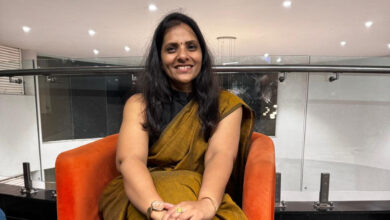

In an exclusive interview, June Roshni Lobo—author of My Father’s Earthen Vessel, Communications & Corporate Relations Professional, Writer, and Speaker—opens up about the quiet strength of relationships, the fragility and resilience of family bonds, and the enduring wisdom passed down through lived experience.
Through deeply reflective prose and powerful metaphor, Lobo’s work moves beyond personal memoir to touch on universal truths about connection, communication, and legacy. In this conversation, she reflects on her father’s humanity beyond his roles, the symbolism of imperfection and endurance, and the emotional stillness she hopes readers carry with them long after the final page.
1. Your book is deeply personal yet universally resonant. Is there a moment or memory of your father that, when revisited, instantly reminds you of who he was beyond his roles and responsibilities?
He was a people’s man, instinctively attuned to those around him, with a rare ability to connect across differences. In today’s world, this quality feels almost alien. We seldom pause to truly ask how the other person is doing, or to understand the weight they may be carrying. As individuals, we are naturally drawn inward, attentive to our own feelings, needs, and what serves us best. That instinct is not wrong; it is necessary. Yet, as difficult as it can be, there are moments when looking beyond ourselves becomes an act of grace.
2. The imagery of an earthen vessel carries quiet power. How do its visible cracks and weathered surface reflect the way family legacies are shaped not by perfection, but by endurance and lived experience?
The earthen vessel is a metaphor for a woman, one shaped by immense strength and quiet wisdom, holding within her an endless reservoir of unconditional love. Like families themselves, she is not formed in purity or perfection, but through lived experience. Families are complex units, built from laughter and joy, but also from sorrow, tears, arguments, anger, friction, and misunderstanding. These elements leave their marks, much like cracks on clay. Yet it is within these imperfections that true endurance is revealed. Some families collapse under the weight of negativity, while others rise above it, choosing to build, to create, and to continue forward without malice or unrest. The truth is simple and enduring. Even with cracks, families survive. They exist. In moments of sorrow and unrest, they come together, or at least they should. Communication becomes the quiet glue that holds them intact, and understanding is the cement that binds what feels fractured, allowing the structure to stand not because it is flawless, but because it is resilient.
3. When readers turn the final page, what emotional truth or inner stillness do you hope stays with them long after the story ends?
When readers turn the final page, I understand that each of them arrives with a different inner landscape. Some already believe deeply in the sanctity of family, unity, and togetherness, and may resonate with the idea of releasing ego, pride, and anger. Others may be comfortable with distance, with selective closeness, or with silence, choosing limited conversation and emotional space. How the story is absorbed depends entirely on what each reader is ready to receive. What I truly hope lingers is a quiet awareness that we are given only one life, and tomorrow is never guaranteed. As women, we are creators within our own worlds. We build, we nurture, and we sustain the emotional climate of our families and communities. We can do this with goodness and purity, or we can shape our surroundings through ego, anger, and unresolved friction, allowing those traces to seep into the lives of our children and the people we love. I hope that readers pause, reflect, and choose what kind of legacy they wish to leave behind.
4. While chronicling your father’s life and values, did the process reveal something unexpected—about yourself, your lineage, or the unspoken dynamics within your family?
Yes, very much so. Writing, for me, became a deeply meditative act. It draws from what you feel, think, imagine, and remember, and as that inner voice slowly finds its way onto the page, something shifts. Memories resurface, questions long held quietly begin to find their answers, and clarity arrives in unexpected ways. Through this process, I realized that many of the stories my father shared were never just anecdotes. They were deliberate offerings of wisdom, gentle attempts to prepare us for life. At the time, however, the lens through which I received them was often clouded, shaped by youth, circumstance, or emotional distance. Writing became my way of returning to those moments. It allowed me to walk back in time, revisit those lessons, and view them through his eyes rather than my own. In doing so, I finally understood them as they were meant to be understood. It has been an enlightening and deeply personal realization, one that revealed not only my father’s intent, but also my own growth, perspective, and capacity for understanding.
5. In an age defined by speed and noise, what small, almost forgotten habit from your father’s life do you believe has the power to reconnect families in meaningful ways today?
In a world racing forward in constant motion and noise, one quiet habit from my father’s life stands out with remarkable relevance today. He made a conscious effort to bring everyone to the table, not just to eat, but to talk, to listen, and to share. That simple act carried intention. It created space for conversation, reflection, and connection. Today, we often move through life on autopilot, absorbed in our phones and devices, animated by screens yet distant from one another. Meals are rushed or solitary, and families rarely sit together to ask how the other person is truly doing. Yet something essential is lost in that absence. Sharing even one meal, unhurried and present, becomes an act of care. It allows loved ones to exchange stories, concerns, and moments of quiet understanding. Too often, we look for connection outside the home because we no longer see family as our primary support system. When we feel depleted, we seek solace in strangers or paid conversations, forgetting that many of our answers already live within our own walls. At that table, where voices are honest, and hearts are open, there is space to be heard, to be understood, and to heal. Sometimes, all it takes is the courage to sit down together and talk.